What’s on it
One card, two sides. The front decides. The back weighs.
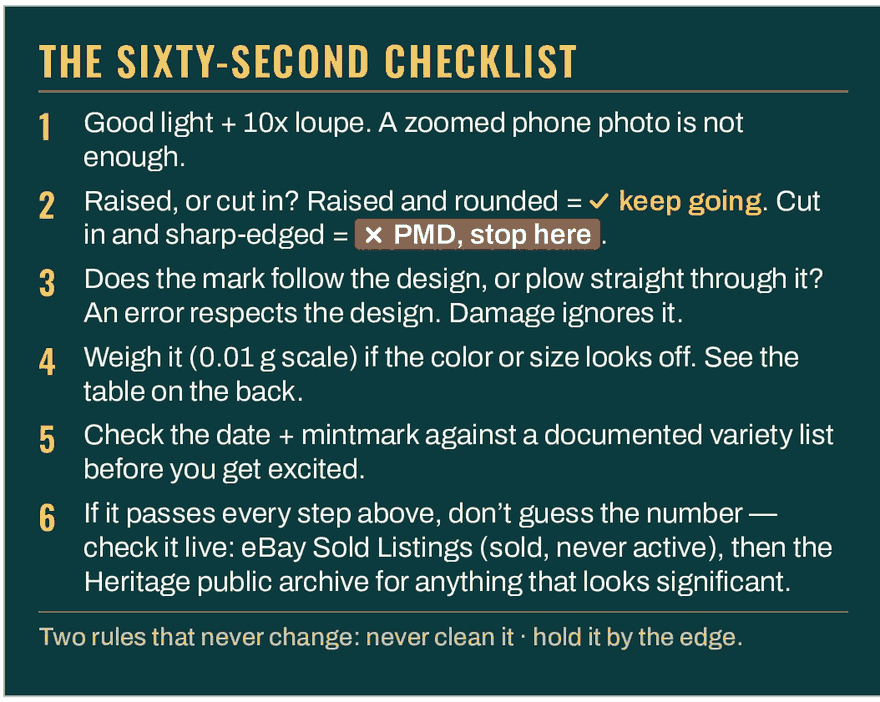
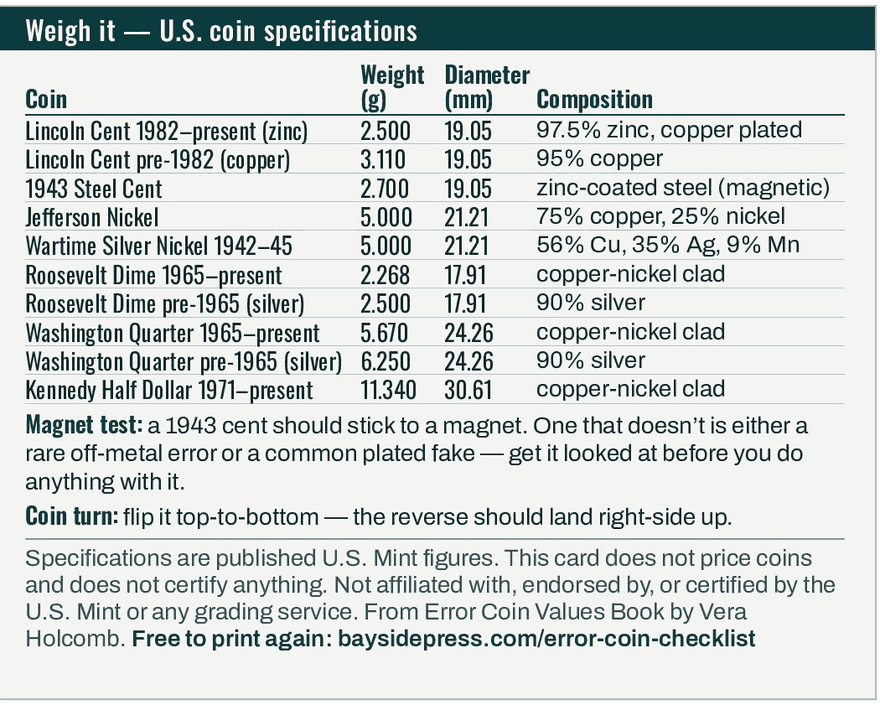
It prints legibly in black and white too — nothing on the card is told by color alone.
How to print it
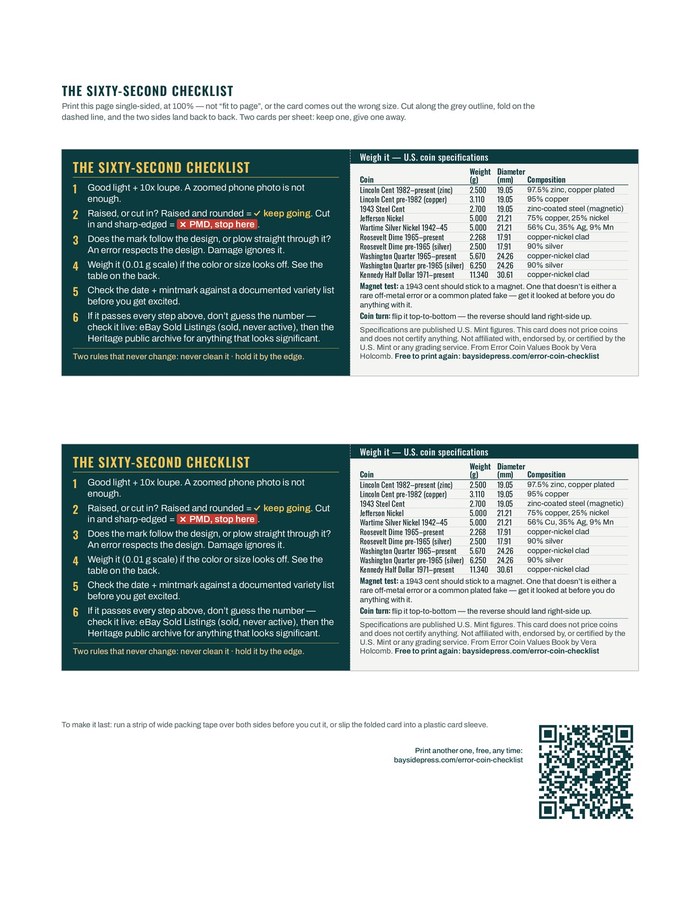
- Print page 1 at 100%, single sided. Not “fit to page” — that shrinks it and the card comes out the wrong size.
- One cut, one fold. Each card is its front and its back side by side, joined by a dashed line. Cut once, fold once, and you have a two‑sided card without ever fighting a duplex printer.
- Two cards per sheet. Keep one, give one away. A strip of packing tape or a card sleeve and it survives a pocket.
Optional — you already have the card
Want the photo guide too?
There is a second free guide on the way: How to Get a Real Answer on a Coin (Without Getting Laughed At).
Sooner or later the card sends you to ask someone. This one is about that part: the four photographs that are always needed, how to light a coin with a desk lamp and a sheet of paper, the loupe‑in‑front‑of‑the‑lens trick, how to word the question — and how to tell a reply that knows from a reply that’s guessing.
It’s being finished now. Leave your address and it lands in your inbox the day it’s done.
The card above is already yours — this box has nothing to do with it. A couple of emails, then it stops. One‑click unsubscribe on every one. Your address is never sold or shared. How email works here.

Vera Holcomb
Vera Holcomb writes identification guides for ordinary collectors: people going through a jar, a drawer, or a box out of an attic, trying to tell a genuine piece from something merely old and damaged.
She works from what can be checked: a test you can run yourself, a photograph to compare against, and a value you look up today rather than read off an old table.
Here, that means U.S. coins, and the line between a true mint error and ordinary damage.
Where this card comes from
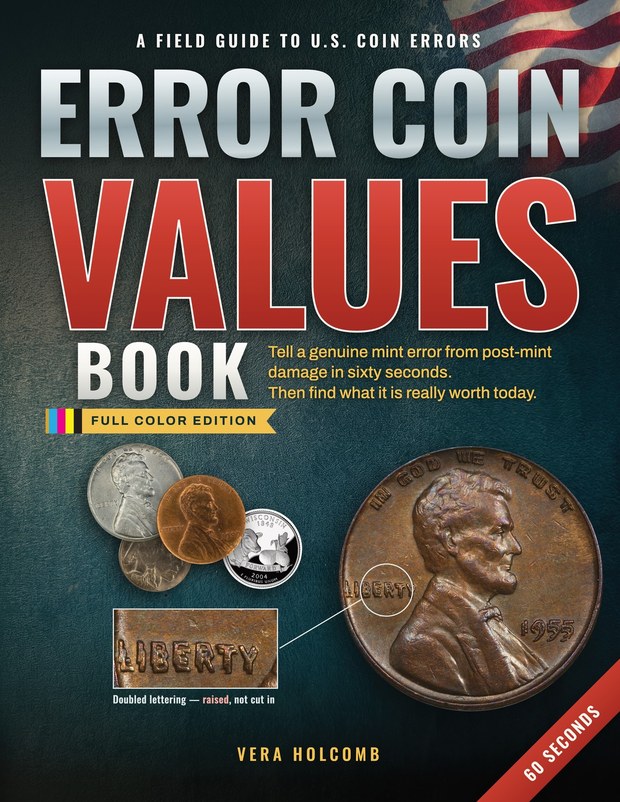
The card is the short version of Chapter 1 of Error Coin Values Book — a field guide to telling a genuine mint error from ordinary post‑mint damage, with close‑up photographs and technical diagrams, printed in full color.
The card is a free gift to readers, and to anyone who finds this page. You don’t need the book to use it.