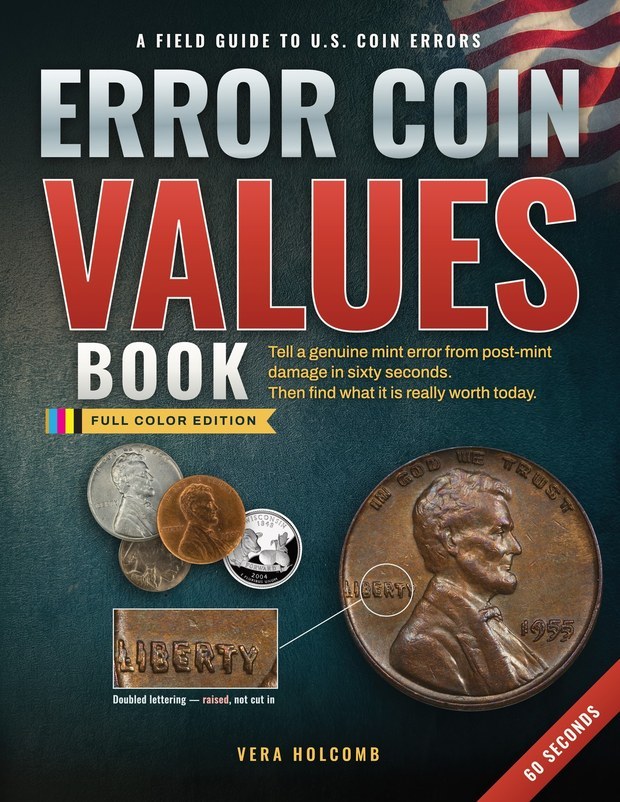
Error Coin Values Book
U.S. coins, and the line between a true mint error and ordinary damage.
A field guide to telling a genuine mint error from ordinary post‑mint damage, with close‑up photographs and technical diagrams, printed in full color.

Bayside Press
Identification guides for ordinary collectors.
For the jar on the shelf, the drawer nobody has opened in years, and the box that came down from the attic.
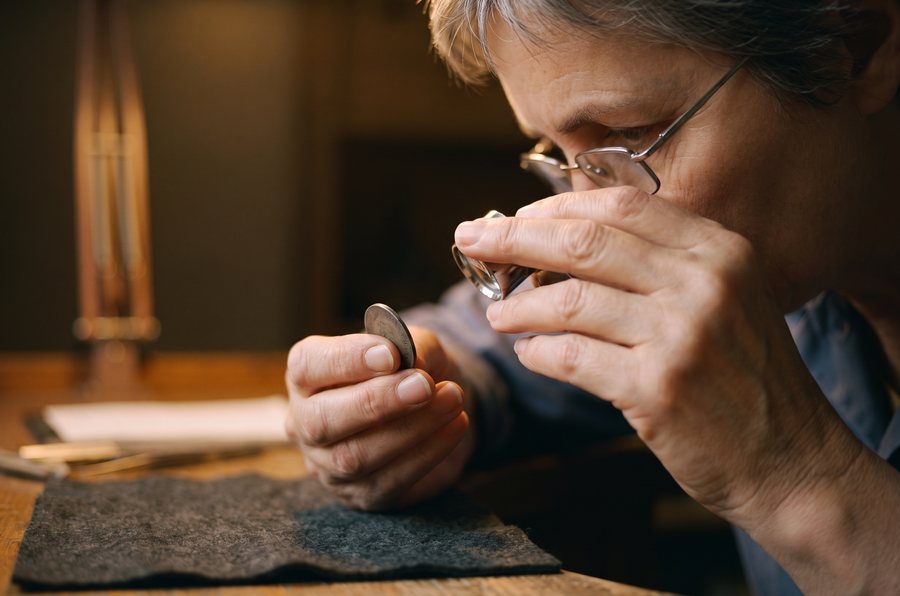
Vera Holcomb writes identification guides for ordinary collectors: people going through a jar, a drawer, or a box out of an attic, trying to tell a genuine piece from something merely old and damaged.
She works from what can be checked: a test you can run yourself, a photograph to compare against, and a value you look up today rather than read off an old table.

Nothing gets asserted that a reader can’t verify for themselves. If a claim can’t be tested at a kitchen table with a lamp, a loupe and a scale — or checked against a published figure — it doesn’t go in the book.
That includes prices. A number printed in a book is a number from the day it was printed. The guides teach you where to look it up today instead.
U.S. coins, and the line between a true mint error and ordinary damage.
A field guide to telling a genuine mint error from ordinary post‑mint damage, with close‑up photographs and technical diagrams, printed in full color.
More guides in the same family are in the works — other coins, paper money, tokens, hallmarks on old silver. Same method, different material. They appear here as they are published.
There are a lot of thin books about old things. Four questions sort them out, and they cost you about a minute in the look‑inside preview.
Found a mistake in a guide? Think something in it is wrong? Say so — that is how the next edition gets better.
What she can’t do: tell you what your piece is or what it is worth from a photograph. No honest person can, and a guide that pretends otherwise is the sort this page just warned you about.