Putting Food By
Canning in a water bath and what really needed a pressure canner, crocks and pickling, the root cellar, drying — and a calendar of the preserving year, month by month.
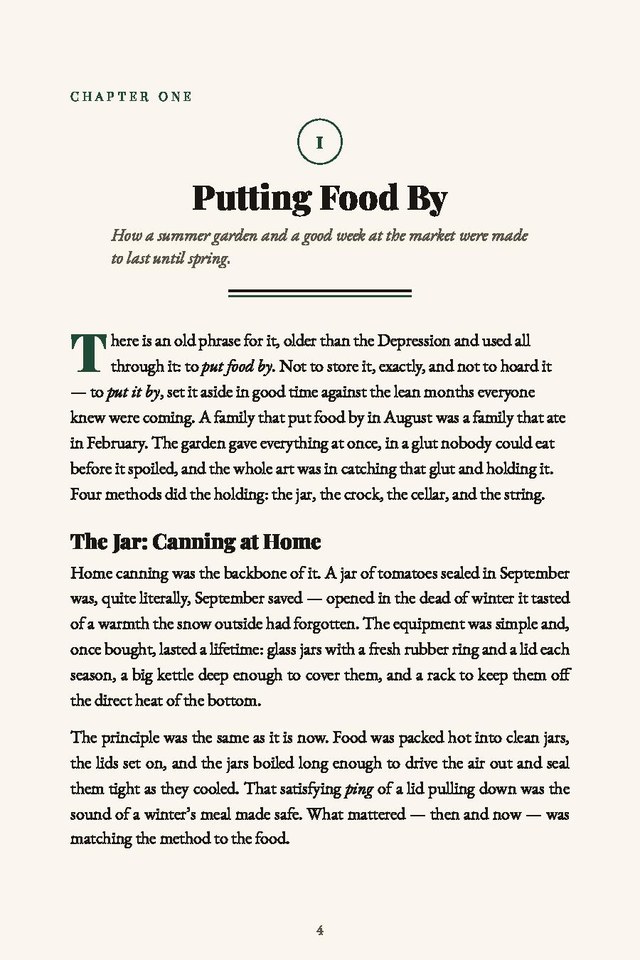
You’ve got the cookbook in your hands. This is the thank-you I promised on the last page — and it turned out to be a whole second little book.
Your free Depression-Era Home & Pantry Companion — 23 pages on everything the house needed besides supper: putting food by, making do and mending, soap and a clean house, and the little ledger that kept a family afloat. Not one recipe in it — those are all in the book.
Free PDF, 23 pages. No email needed — a straight download, nothing to buy.
There’s a printable kitchen toolkit further down as well — the 1933 oven chart, the substitution card, the meal-stretcher planner and the shopping list. Also free, also no email.
 Free · no email
The cookbook tells you what they cooked. This tells you how the rest of the house ran — which is where most of the money was actually saved.
Canning in a water bath and what really needed a pressure canner, crocks and pickling, the root cellar, drying — and a calendar of the preserving year, month by month.
History, not medical advice
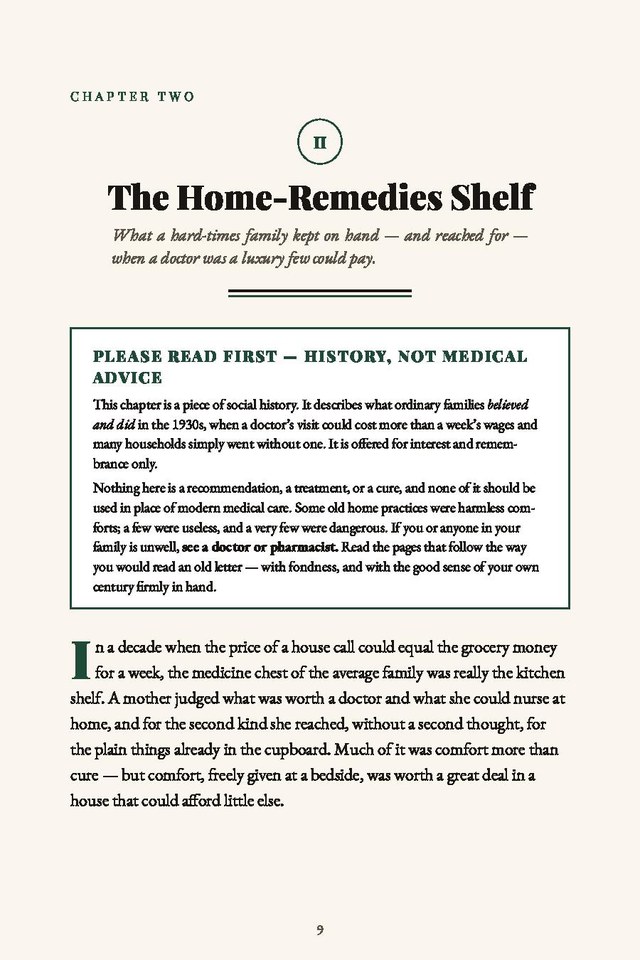
What sat on the shelf in 1933 and what people believed it did — written as history, with the disclaimer said plainly on the page. For anything that ails you today, see a doctor or pharmacist.
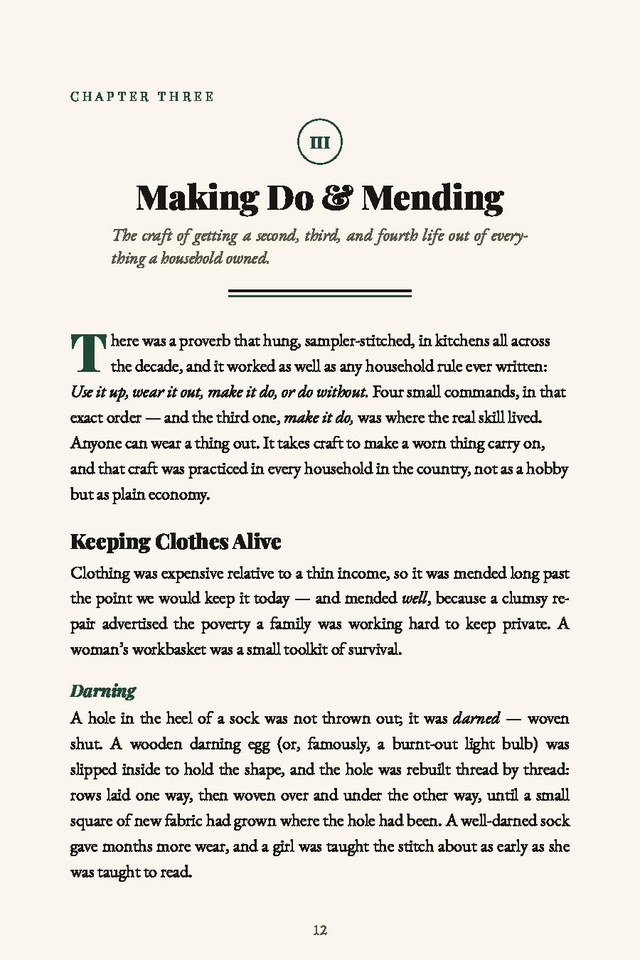
Darning, turning a collar so a shirt lived another two years, the flour-sack dress, what belonged in the sewing basket, and the habit of throwing almost nothing away.
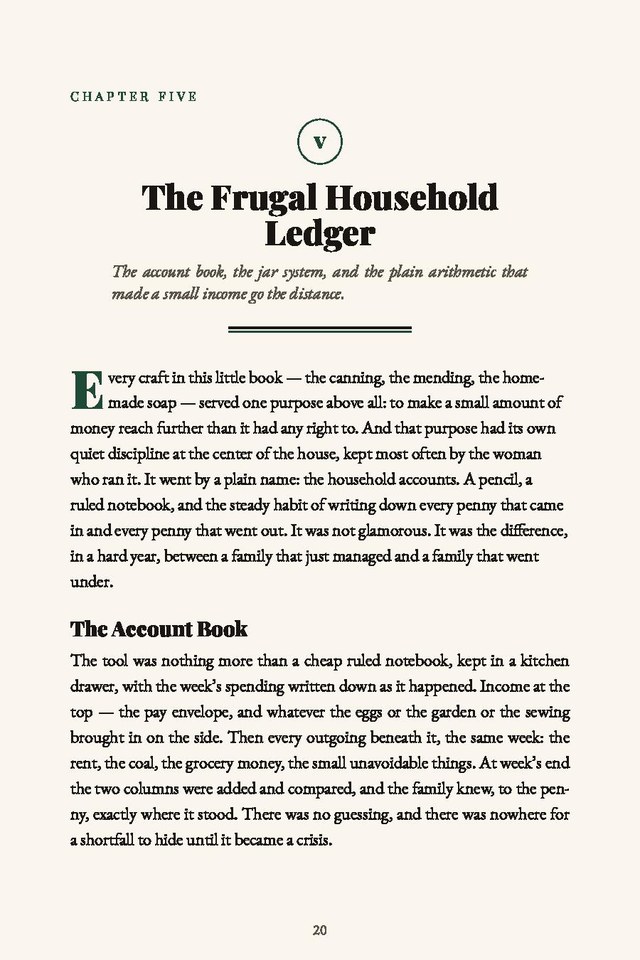
How soap was made at home (with the period’s own warnings about lye), the four cheap cleaners that did nearly everything — baking soda, vinegar, salt, washing soda — and the housekeeper’s week. Then the part nobody photographs: the account book, the jar-and-envelope system, and paying yourself first out of almost nothing.
Four printable cards for the wall by the stove or the inside of a cupboard door. Print them, tape them up, and stop looking things up mid-recipe.
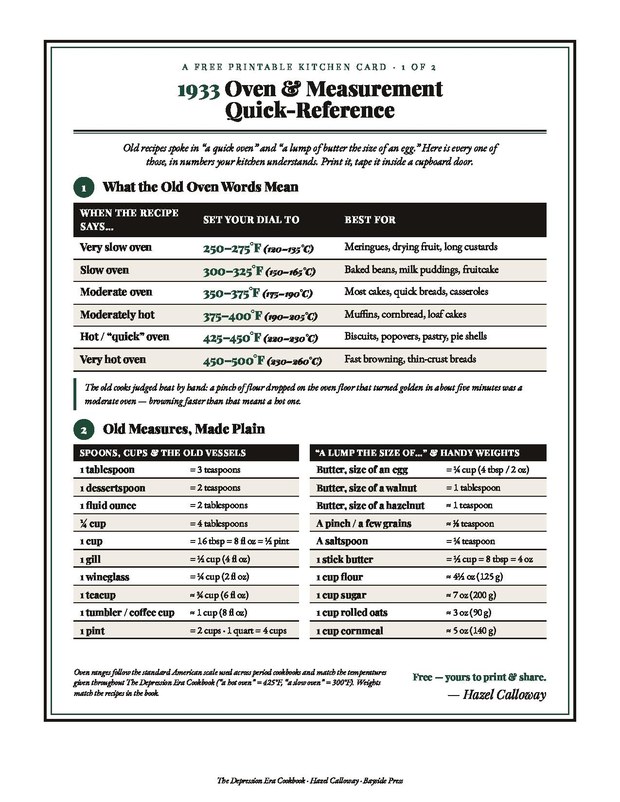
“A quick oven” is 425°F. “A slow oven” is 300°F. “A lump of butter the size of an egg” is a quarter cup. Every old oven word and old measure, in numbers your kitchen understands.
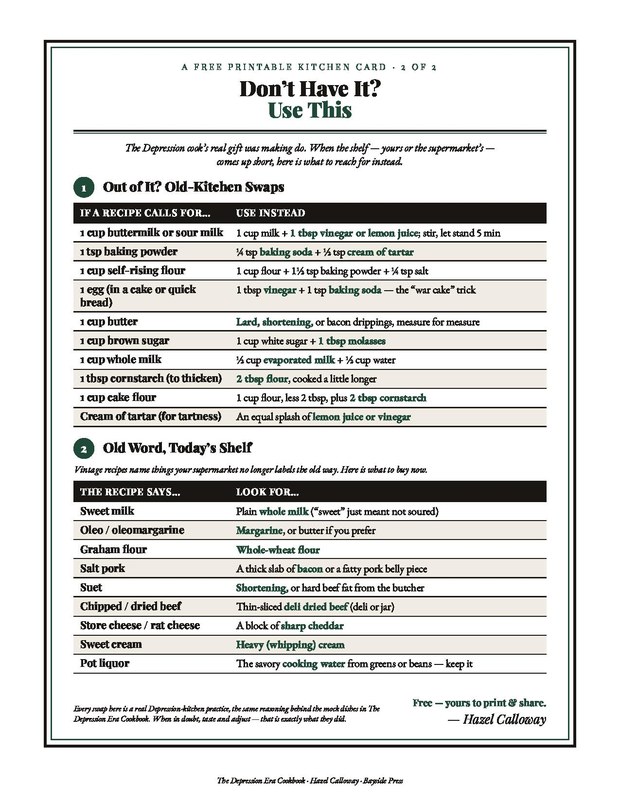
The substitutions the old cooks leaned on — no eggs, no butter, no milk, no money — including the mock dishes that made one thing taste like another.
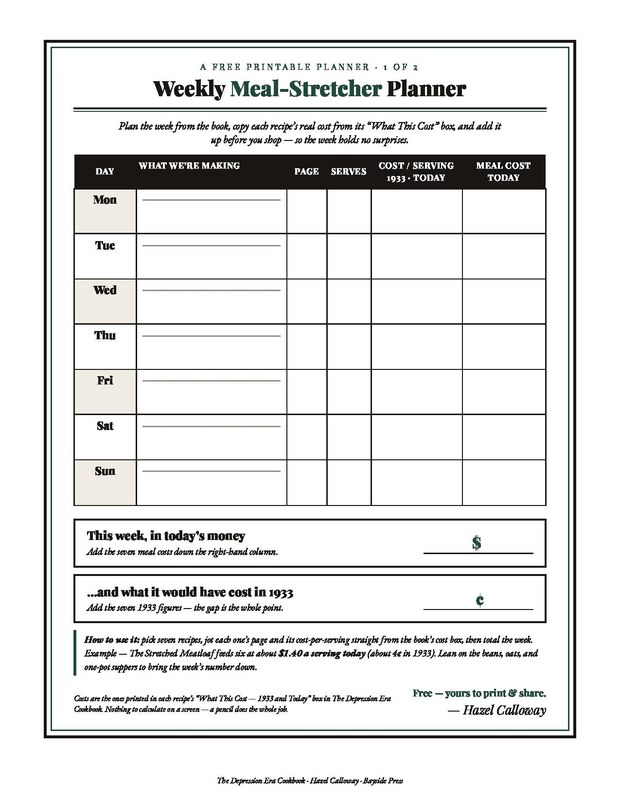
One page to plan a week the way they did it: cook once, stretch it twice, and write down what the serving actually cost you.
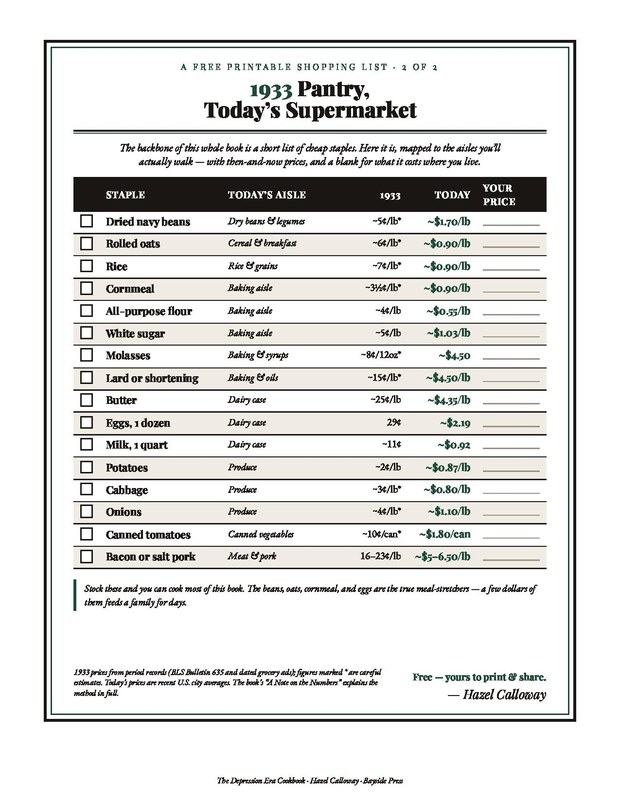
The staples a 1933 kitchen actually kept, written as a shopping list you can carry into a 2026 store — aisle by aisle, nothing exotic.
Two printable PDFs, US Letter. Free, no email — same as the companion.
That’s the whole idea, and it’s the reason this book took as long as it did.
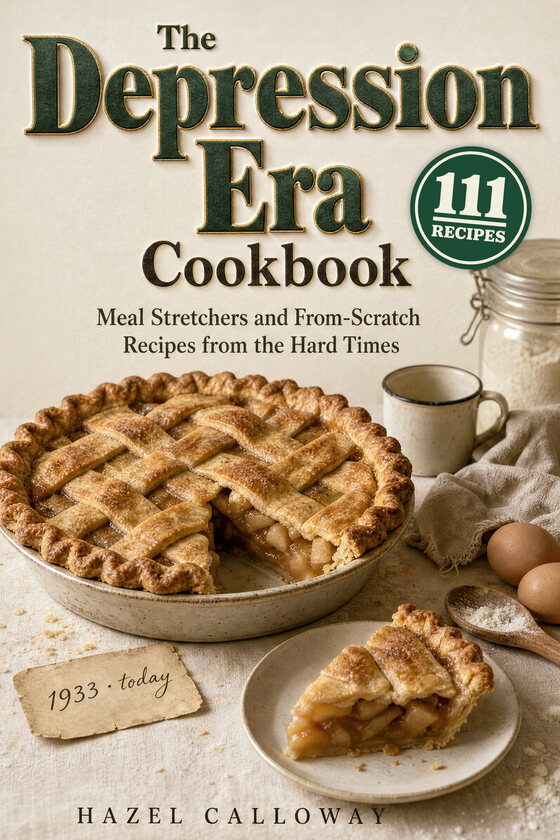
111 recipes, each with both numbers.What the dish cost the family who first made it in 1933, and what it costs per serving in a supermarket today. Side by side, on the same page.
The 1933 prices come from somewhere you can check.The backbone is the Bureau of Labor Statistics retail food price bulletin for 1923–1936, with today’s figures from current BLS average-price data. Where a price genuinely isn’t in the record — spices, baking powder, a packet of crackers — the book says so and calls its number an estimate.
Every old instruction translated.“A quick oven” becomes 425°F. “Butter the size of an egg” becomes a quarter cup. Nothing is left for you to guess at.
Everyday ingredients, and print you can read.150 pages, nine sections, set in large readable type — and no squirrel, no game, no filler dressed up as history.
And the honest part: this book has only just come out, so there are no reader reviews to show you yet, and no numbers to quote. I’d rather show you nothing than show you something invented — you can judge it by the pages themselves, which is what the free companion is for.
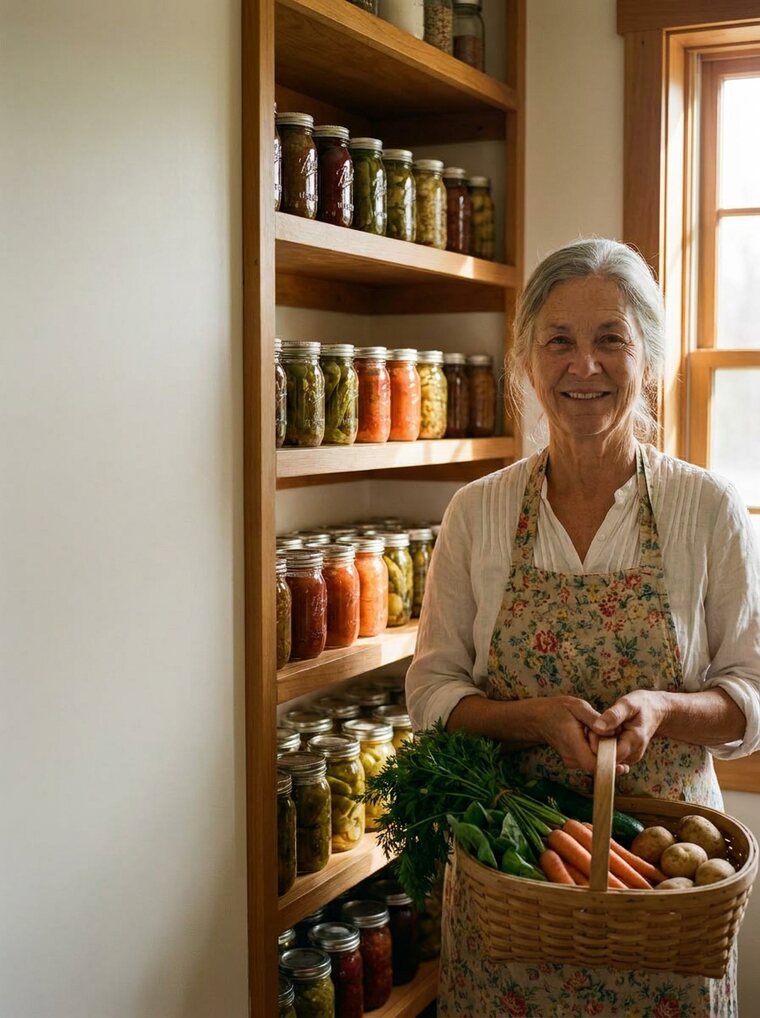
Farm-raised, and a keeper of the old family ways
I grew up on a small family farm, watching my mother and grandmother do just about everything by hand — putting up the garden, mending, cooking from scratch, making do with whatever was in the house. Nobody called any of it thrift. It was simply how you got to Friday.
I wrote The Depression Era Cookbook because I got tired of old-recipe books that hand you a charming story and no way to cook the thing. A recipe is only honest if you can see what it cost the family who first made it, and what it costs the family making it tonight — so every dish in the book carries both.
About this photograph: it was made with the help of AI imaging tools. Hazel Calloway is the pen name under which these books are written and published by Bayside Press.
Everything on this page is already yours — no email needed for any of it. But if you’d like the companion and the toolkit landing in your inbox so you don’t have to find this page again, and the occasional note from me when there’s something new, leave your address below.
No spam, ever. Your address is used only to send you these free files and the odd note — never sold, never shared. Leave any time, one click. Nothing on this page ever depends on it.
Twenty-three pages on how a house was kept when there was nothing to keep it with. Read it on the couch, or print it and put it in the drawer with the good scissors.
Free PDF — no email, no strings.